Parish Recognition · buyer guide
Joint congregation gifts versus separate dedications
For worldwide Parish Recognition orders, choose one joint congregation gift when the intended recipient should own one shared object. Choose separate dedications when different owners or destinations need their own pieces. Agree on ownership and the common message before turning the number of contributing congregations into a physical plaque count.
Reviewed 2026-09-05 · AI-assisted editorial review. General buying guidance; illustrative scenarios are not customer case studies. Images are AI-generated concepts.
A joint congregation gift works best when everyone agrees who receives and keeps the object. A shared funding effort does not automatically mean a shared display location, and one presentation does not mean every group wants the same message. Ask whether the object will belong to the recipient personally, stay at a host church or rotate between congregations. Then compare separate dedications against that ownership plan. A single plaque can express a common message clearly when the participating groups approve one voice. Separate pieces can make sense when each group has a distinct relationship or destination. Do not choose a shared object solely to avoid several proofs; an unresolved ownership decision can become more awkward after a public presentation than during planning. Put the intended owner and home location in the first row of the worksheet so the physical choice serves a known purpose.
How do you write the common message before listing contributors?
Invite each congregation to contribute its intended meaning, then ask one coordinator to produce a concise shared draft. The goal is not to join several paragraphs with decorative separators. Identify what the groups can say together and reserve distinct memories for cards or spoken remarks.
If the common message becomes so broad that it loses the reason for the gift, consider separate dedications. Confirm the exact public names of the participating congregations, including any punctuation or location qualifiers they request. A financial contribution does not tell the designer how prominently a church name should appear. Have the organizers agree whether names receive equal treatment, alphabetical order or another explicit arrangement. Keep that presentation decision separate from private funding amounts. The final inscription should communicate the agreed relationship without exposing an internal contribution ledger or suggesting a hierarchy that nobody approved.
DIY Awards presents appreciation and ordination-anniversary wording examples.
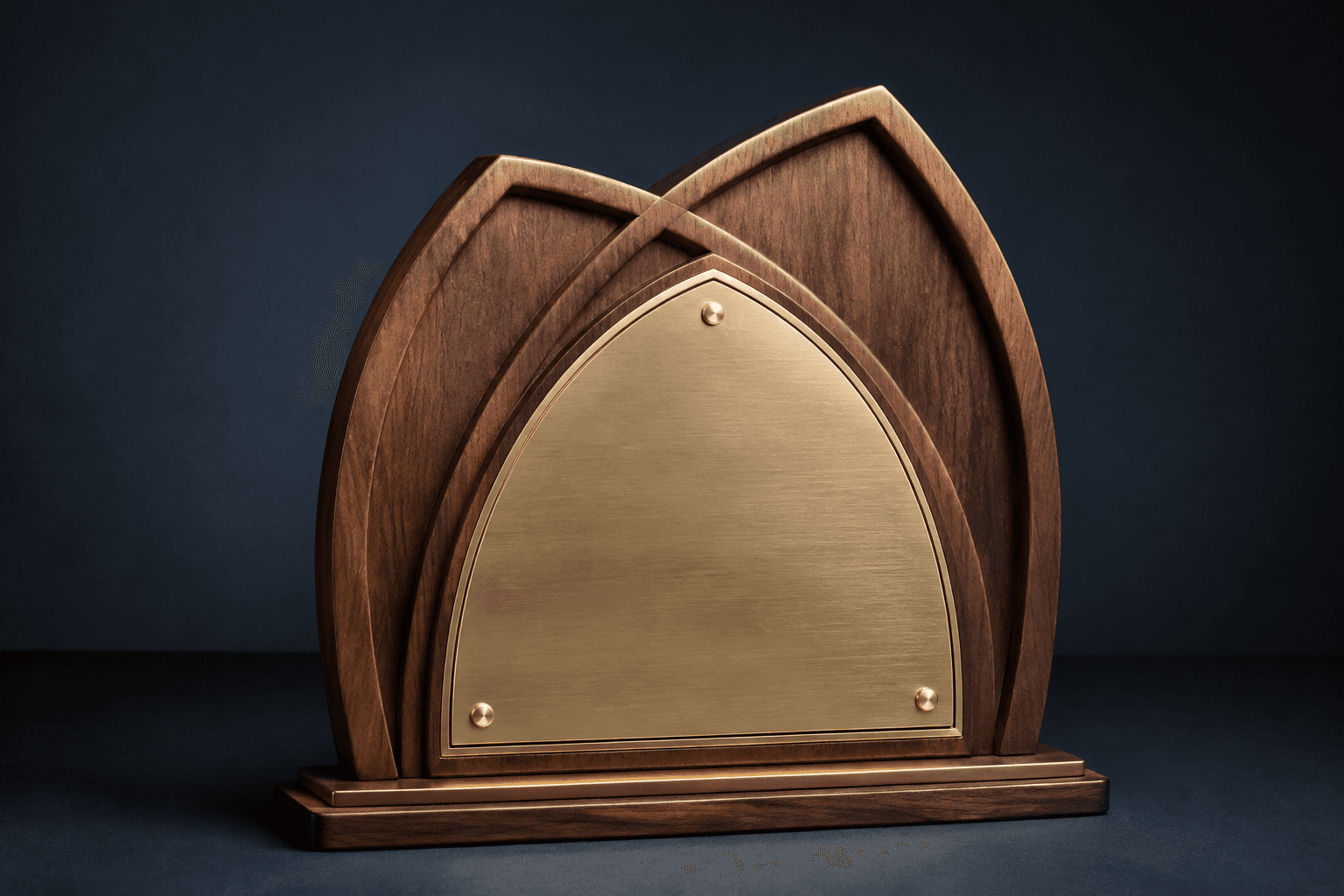
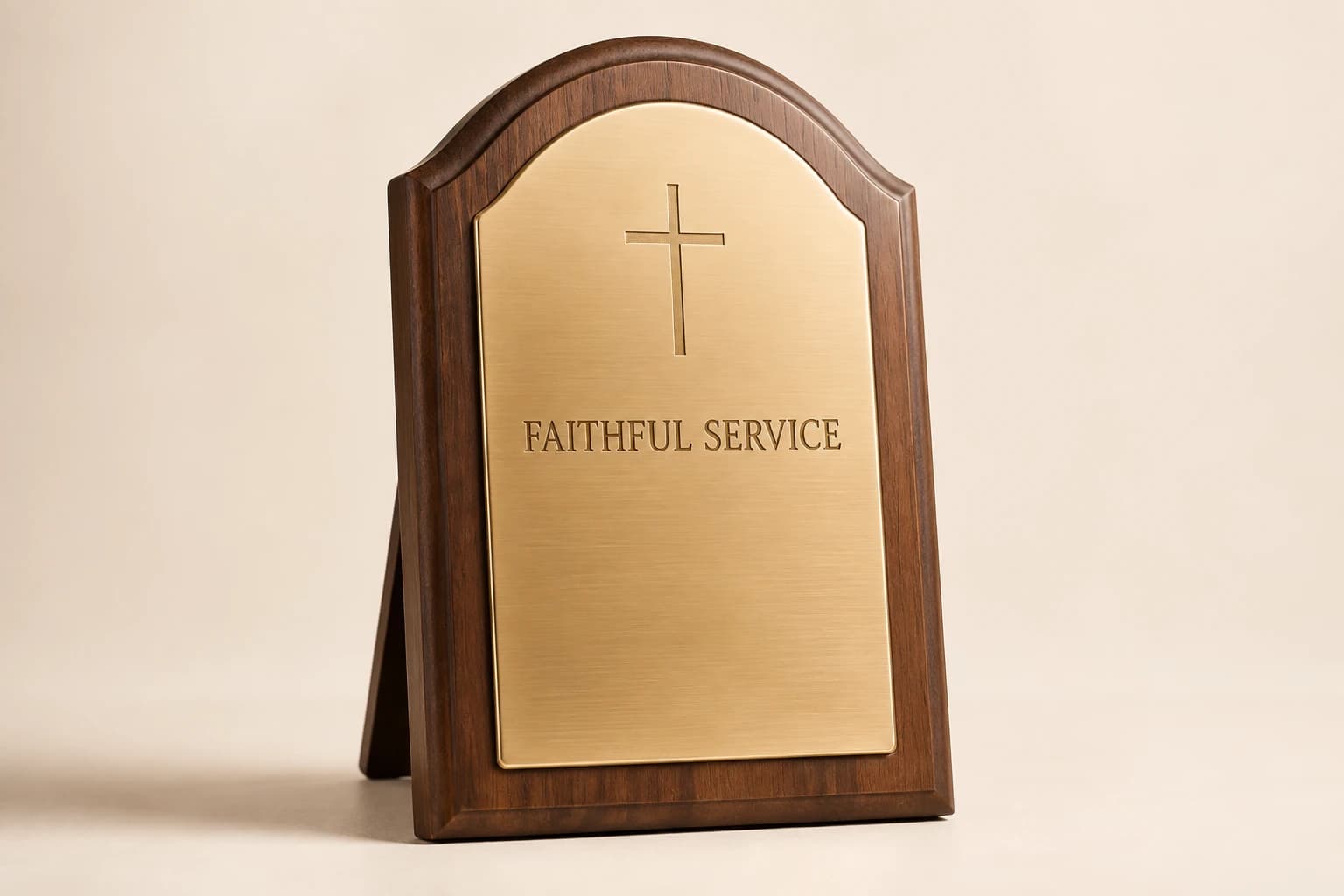
Sources: DIY Awards: Pastor Anniversary Tributes and Sample Wordings
How do you compare one object with one object per destination?
Count the actual physical objects by where they will be used rather than by how many people attend the ceremony. One shared plaque may need one separately specified presentation box, while separate dedications may require different packaging and delivery addresses.
If the recipient receives one main gift and each congregation keeps a smaller record, describe that hybrid arrangement explicitly; those are additional physical pieces, not free copies implied by a joint order. Ask for a proposal that separates the main object, any companion pieces and personalization for each. For separate dedications, decide which visual elements should connect the set and which text can differ. A consistent name treatment or occasion line may be enough to make the pieces feel related. Requiring every paragraph to match can defeat the reason for choosing separate messages in the first place.
How do you give each congregation a bounded approval role?
Assign one representative per congregation to confirm its name and its contribution to the shared message. Name a final coordinator who resolves conflicts and releases the complete proof. Otherwise several well-intentioned reviewers can send incompatible changes to production. For separate dedications, create a proof record for each object and make clear which reviewer controls it.
A correction to one church name may affect the shared piece, the program and a companion plaque, so record the scope rather than forwarding an isolated text edit. Establish an internal review date early enough to allow a new proof if the groups disagree. Do not interpret silence from one congregation as approval of a joint attribution. If that approval remains unavailable, revise the scope with the organizers before the final message claims to speak on behalf of the group.
How do you rehearse the handoff as part of the design?
Ask the ceremony organizer to describe how the gift will move from the presentation table to its intended owner. One shared object can avoid a long sequence of handoffs, but it may also leave several presenters unsure who should hold it.
Separate pieces can give each congregation a clear moment while requiring more staging space and package labels. Use the rehearsal to identify the need for a stand, protective packing or a designated person to take custody after photographs. Do not infer those components from a concept image; confirm them in the order. If a shared plaque stays in a church building, agree who arranges its eventual display. The ceremony should not be the first time anyone realizes the recipient expected to take the object home while the host planned to install it in a public room.
Count the joint gift and optional host copy
Load the fictional example, then replace its inputs with the reviewed details for your project.
Method: Multiply the entered units by pieces per unit, then add explicitly entered extra category pieces and spares. The result counts inputs without deciding recognition eligibility or product inclusions.
Build your plan
Set spares yourself. This calculates the quantities you enter; it does not assume a recommended buffer.
Use the article’s example files
Sample rows are illustrative and are not production instructions. Replace their assumptions, keep private records separately and complete the approval fields before using the sheet for a real order.
How do you keep future copies from changing the original meaning?
Retain the approved shared message and the names of the original presenting groups. If another congregation later requests a copy, decide whether it is reproducing the historical joint gift or commissioning a new dedication. Adding a new name to an old attribution changes what the object says about the original presentation.
A new companion piece may be more accurate than silently revising the shared record. For separate dedications, keep each proof linked to its destination so a replacement does not accidentally inherit another congregation’s closing line. Ask the recipient or host to confirm where additional copies will go before ordering them. This keeps the joint project understandable over time and prevents an apparently simple reorder from creating an ownership or attribution decision that the original organizers never considered.
How do you compare equal participation with equal physical quantities?
Three congregations can participate equally in a presentation without ordering three identical plaques. Agree first on the recipient’s preferred outcome, then design a ceremony in which each group has an appropriate voice. A shared inscription might name all three groups, while each representative contributes a short approved remark.
Alternatively, one congregation may present the main piece while the others provide letters or support the event in another way. Do not let a physical quantity become an accidental measure of each group’s importance. If separate pieces are chosen, ask whether the recipient actually has a use or location for all of them. A set of related dedications may be welcome; three near-duplicates may reflect the committees’ organization more than the recipient’s needs. The worksheet should show the purpose of each additional object. A host copy, for example, serves a different owner and location from the personal gift. That difference justifies its own approval even when most of the artwork is shared.
How does this illustrative planning example work?
In a fictional ceremony, three congregations contribute to one personal gift for a retiring pastor. The organizers first consider three plaques, then decide the recipient would prefer one shared object and three private letters. Their worksheet records one physical plaque, one jointly approved presenter line and three letters prepared outside the production order.
If a host church also wants a display copy, that becomes a separately approved second object with its own ownership and wording review. For the optional-copy version of this fictional plan, enter one main gift, one piece per gift, one additional host-church copy and zero spares. The arithmetic is 1 × 1 + 1 + 0 = 2 physical pieces. If the host declines the copy, change additional category pieces to zero and the total becomes one. The three personal letters remain outside this manufactured-piece count. Each physical copy still needs its own approved ownership and presenter wording.
One joint gift or Separate dedications: which fits the intended recognition?
One joint gift can express shared appreciation through one approved presenter line and a single recipient-owned object. Separate dedications serve distinct owners, messages or display locations. Compare the intended destination and approval responsibility for each piece; equal participation in funding does not automatically require equal numbers of plaques.
| Option | One joint gift | Separate dedications |
|---|---|---|
| Best reason to choose it | Use a single object when the groups approve one shared voice and agree where it belongs after the ceremony. | Use individual pieces when each group needs a distinct message, recipient or display location. |
| Main review question | Who owns the object, and has every named congregation approved the full attribution? | Which elements should stay consistent, and who approves the text and destination of each piece? |
| What to specify | Specify one shared inscription, congregation-name order, final approval contact and permanent destination. | Specify a separate proof and packing identifier for every dedication, with any common artwork clearly linked. |
| Later change | A host copy adds a distinct owner and may need a revised public-facing dedication rather than an automatic duplicate. | A later congregation joining the project needs an approved new message or copy decision; do not rewrite the original joint presenter line silently. |
What should the organizer confirm before ordering?
Agree on the main gift’s owner, the contributor line and any separately approved host copy before counting plaques. Joint funding and multiple letters do not create additional physical pieces automatically. These decisions also determine who reviews each inscription and which receiving destination belongs in the written order.
How do joint and separate gifts change the quote?
Ask Parish Recognition to quote the actual physical pieces and their distinct wording, dimensions, artwork and shipping destinations. One shared plaque and three contributor letters are not three plaques. A host display copy adds a separate object. Request the applicable minimum or range for the selected scope and identify any different proof or receiving deadlines.
Must every contributor appear on the front of a joint plaque?
No universal contributor layout follows from joint funding. Ask the congregations to approve one presenter line that accurately represents the gift, then decide whether individual names belong on the face, another approved area or accompanying letters. The recipient’s message should remain readable without turning the object into an unresolved list of funding shares.
Who should approve a shared inscription?
Give each congregation a defined review role and appoint one coordinator to return the consolidated decision. Contributors can verify their own names while the designated message owner resolves the dedication as a whole. Production should receive one approved version rather than choose between competing emails from people with equally plausible authority.
Is the host congregation’s copy identical to the personal gift?
Treat it as a separate ownership and wording decision. A personal gift may address the pastor directly, while a host display copy may need context for visitors. Confirm whether the host wants an actual second plaque, what it says and where it belongs. Do not assume a display copy exists merely because the ceremony takes place there.
How does the two-piece illustrative count work?
The congregations jointly purchase one personal plaque and deliberately approve one host copy, producing two physical pieces. Their private letters remain outside that production count. The worksheet keeps the shared recipient object and host-owned copy separate so an optional copy can be removed or revised without changing the meaning of the main gift.
Sources and scope
The sources below support the cited technical details. The ordering workflows are editorial recommendations. Your project specification, price and schedule are established in the written quote and approved proof.
- DIY Awards: Pastor Anniversary Tributes and Sample Wordings · checked 2026-09-05
Which buying guide should you read next?
All buying guidesFor worldwide Parish Recognition orders, name the occasion before writing the inscription: pastor appreciation expresses gratitude, while an ordination anniversary marks a specific event. Confirm the milestone’s meaning with the congregation’s reviewer, then give the personal message and the anniversary line distinct roles in the proposed plaque layout.
For worldwide Parish Recognition orders, schedule each congregation’s piece around its actual receiver and presentation role. A host church receiving the main gift does not confirm that visiting congregations’ dedications are ready. Track proof approval, receiving checks and presenter assignment separately, then use the rehearsal as a shared readiness checkpoint.