Parish Recognition · buyer guide
Scripture layouts on small recognition plaques
For worldwide Parish Recognition orders, choose whether scripture or the personal dedication leads the small plaque before arranging the text. Use an approved passage and translation, or a reference-only layout when the full text would crowd the message. Review exact wording, attribution and line breaks together at the proposed physical size.
Reviewed 2026-09-05 · AI-assisted editorial review. General buying guidance; illustrative scenarios are not customer case studies. Images are AI-generated concepts.
A small recognition plaque can carry a scripture reference, a selected passage or a dedication inspired by the congregation’s own words. These are different editorial choices. Ask which element the recipient should see first: their name, the reason for appreciation or the scripture itself. If the passage is the central gift, choose a format around its approved length. If the purpose is personal recognition, a concise reference may leave more room for a readable name and message. Avoid selecting a small object first and then forcing a long passage into whatever area remains. Prepare a draft containing only the essential text so the church can judge its priorities. Decorative symbols and additional sign-off lines can be considered after that hierarchy is settled, rather than competing with the words the group considers most meaningful.
How do you freeze the translation and the exact passage?
Ask the designated church reviewer to supply the exact text, translation name and verse reference intended for reproduction. Do not combine phrases from different translations because one sentence sounds familiar and another happens to fit better. Keep the reference beside the passage in the working document so a reviewer can check them together.
If the group prefers a paraphrase in its own voice, label it appropriately instead of presenting it as an exact quotation. Any permissions or required attribution for reproducing the selected translation should be checked for this project by the responsible organizer; the designer should not make a legal assumption from a short character count. Where that review is unresolved, consider a reference-only concept while the church settles the text. This allows a layout conversation to proceed without turning an unreviewed quotation into a production-ready inscription.

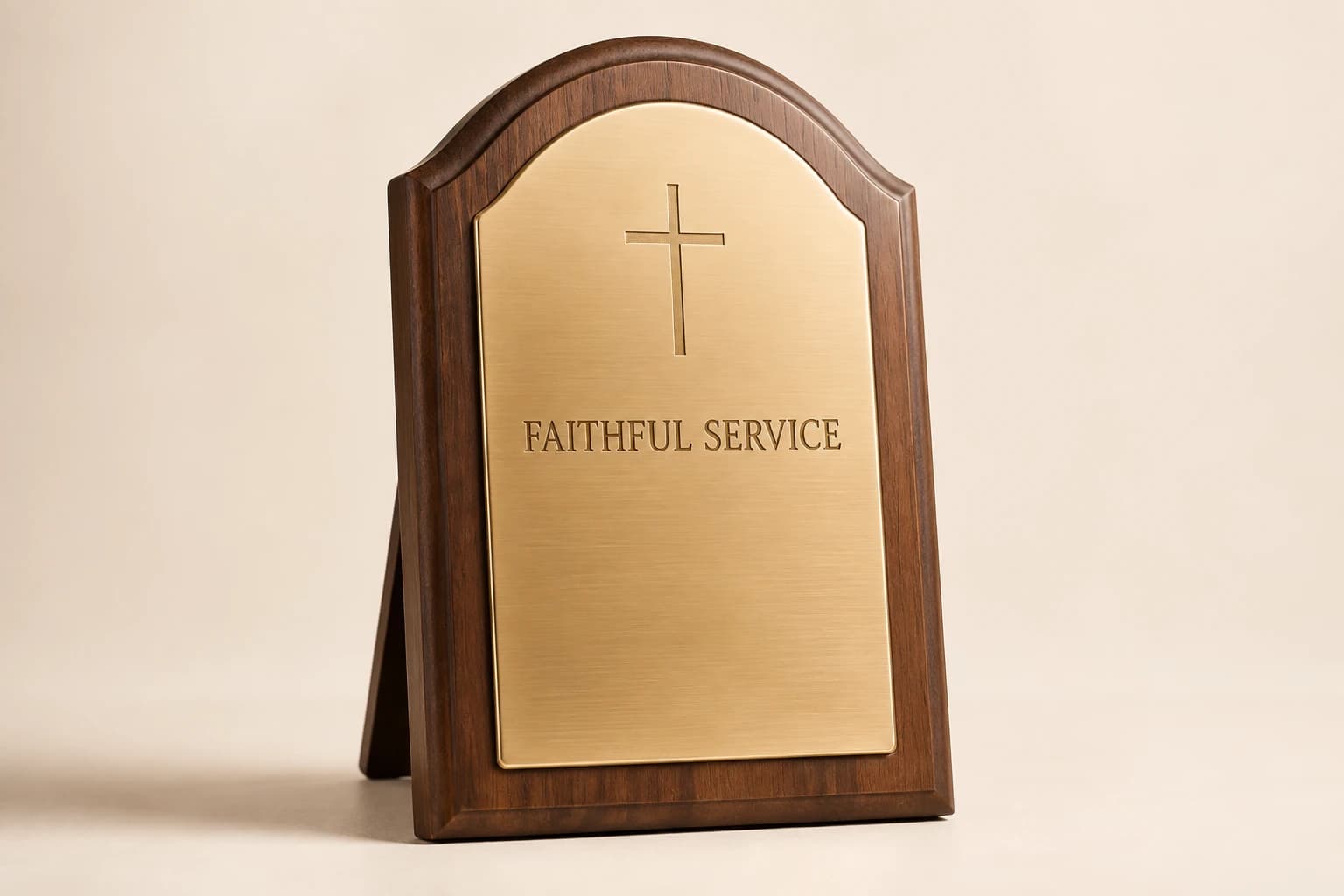
How do you create a line-break proof instead of a compressed block?
Show the passage in intentional lines at the proposed physical size. A break can help a reader follow the sentence, while an arbitrary wrap can separate a modifier from the word it belongs to or make a reference look like part of the dedication.
Ask the church reviewer to read the lines aloud and check that the intended meaning remains clear. Compare two versions with the same text: one using fewer, longer lines and another using more, shorter lines. The choice depends on the actual engraving area and typeface, so do not turn a preferred number of characters into a universal limit. Leave adequate visual separation between the passage, its reference and the personal message. If all three appear as one dense block, the recipient may have to work unnecessarily to distinguish scripture from the congregation’s own words.
How do you shorten the scope without silently editing the quotation?
When the full passage crowds the plaque, offer distinct choices for the reviewer to approve. The group could select a shorter passage, use a reference only, move the longer text to a card or consider a different physical format. Do not remove a few words merely because they fall at the end of a crowded line.
An excerpt needs deliberate selection and a correct reference; a paraphrase needs to be recognized as a paraphrase. Keep every candidate in its own revision so the final reviewer can see exactly which version was chosen. If the recipient’s name is being reduced to make room, revisit the hierarchy before accepting the tradeoff. A recognition gift should not make its recipient visually incidental just because the organizers added a passage after approving the original design.
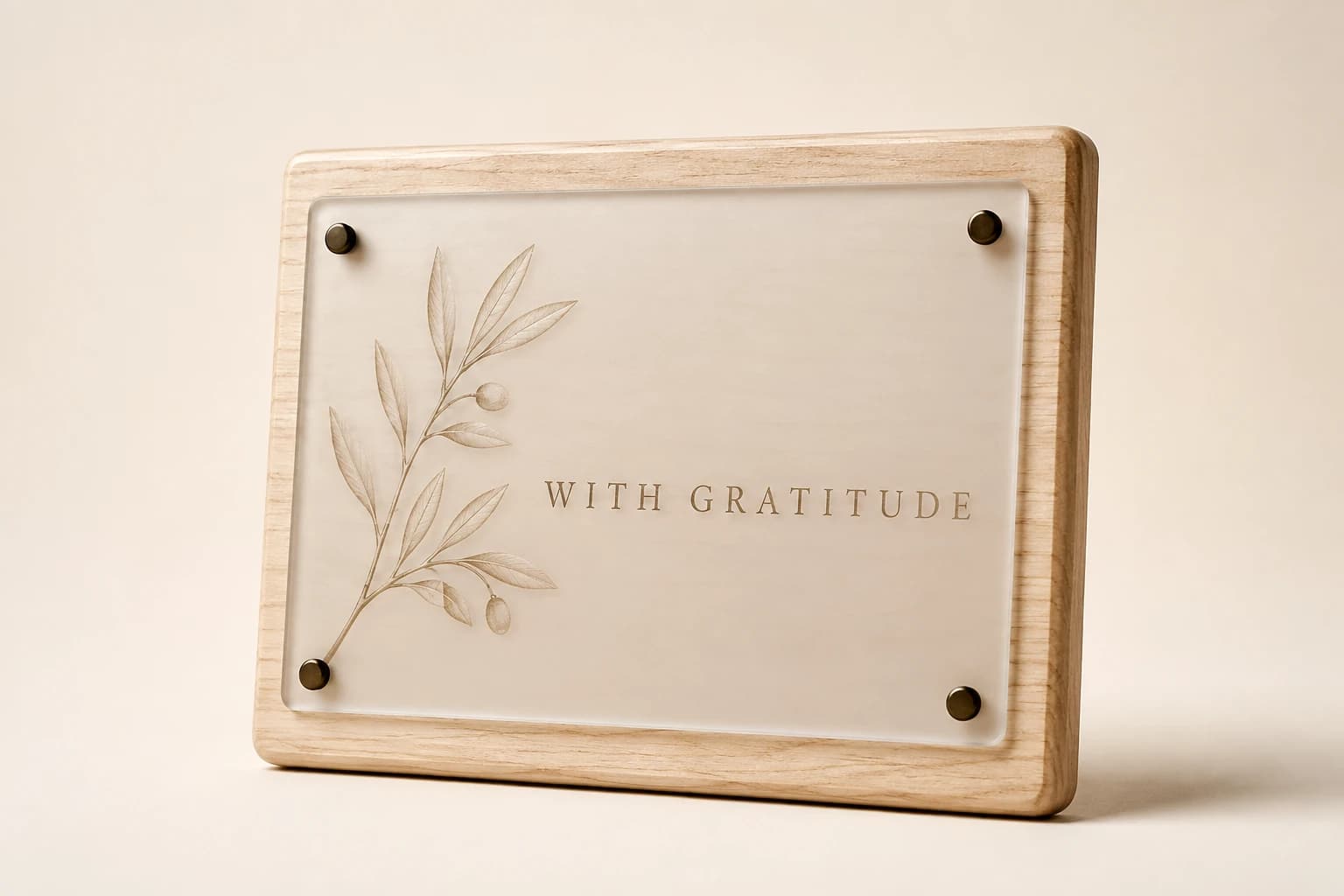
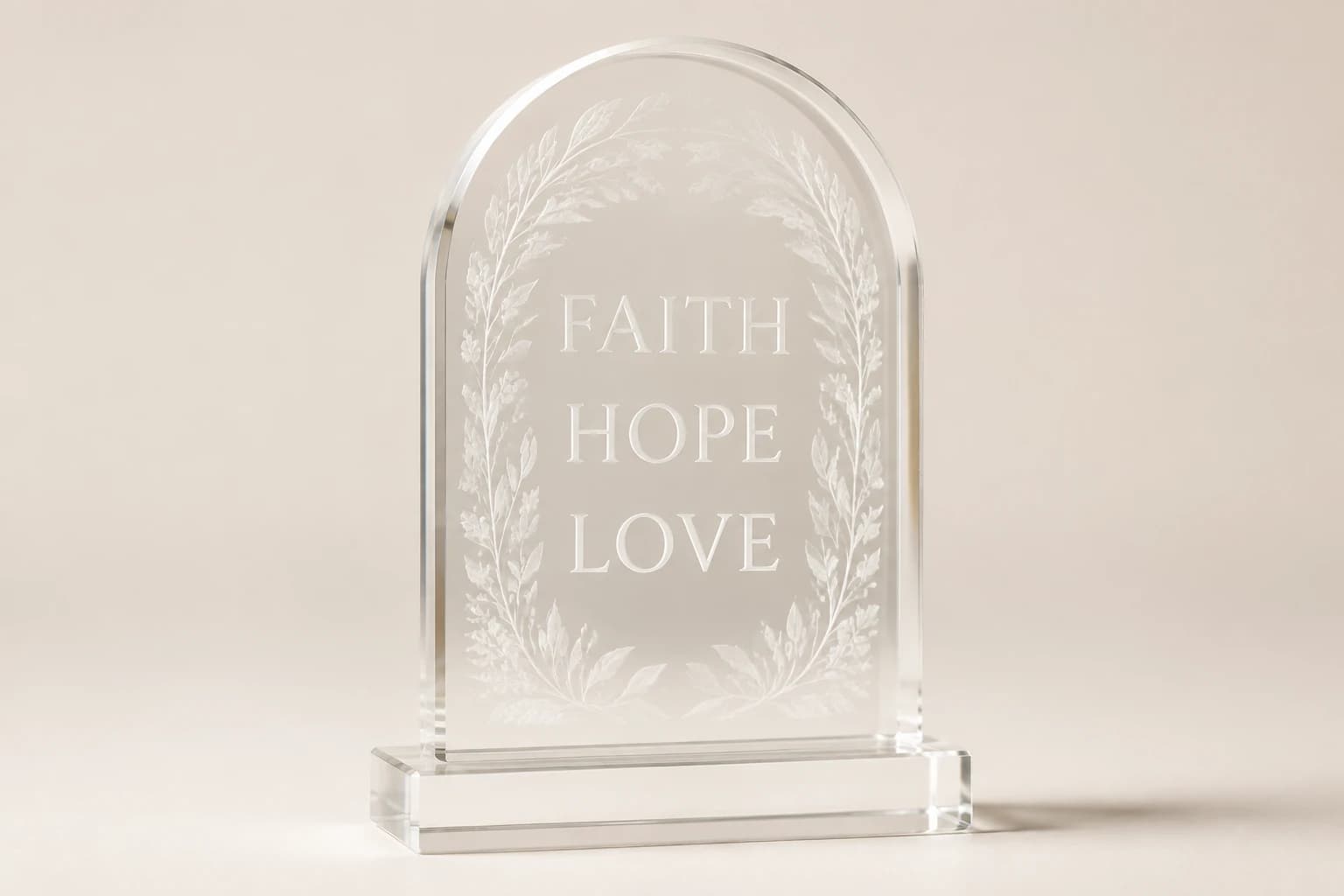
How do you review scripts, punctuation and attribution together?
If the passage uses another language or script, ask a fluent authorized reviewer to inspect the actual rendered proof. Copying text accurately into a form does not guarantee that the selected font displays every character or that line breaks remain appropriate.
Keep punctuation, accents and the reference format intact unless the reviewer approves a change. For a bilingual design, decide whether both versions are equally prominent or whether one is a supporting translation; show that choice in the proof rather than leaving the designer to infer it. Include any approved translation attribution in the layout review because it also consumes space. A final text check should compare the complete proof to the exact supplied passage. Reviewing only the familiar opening words can miss an error later in the text or in the citation line.
Check the scripture-reference layout
Load the fictional example, then replace its inputs with the reviewed details for your project.
Method: Count visible characters including spaces and punctuation on each entered line; compare each length with the user-entered line budget. Text counts do not establish physical fit.
Build your plan
Counts include spaces and punctuation. Character count cannot establish physical fit: font, script, layout, material and engraving area require a proof at actual size.
Use the article’s example files
Sample rows are illustrative and are not production instructions. Replace their assumptions, keep private records separately and complete the approval fields before using the sheet for a real order.
How do you retain a reproducible text record after approval?
Save the exact character string, translation identification, reference and approved line breaks alongside the final artwork. A future reorder should not pull a fresh version of the passage from an unrelated website or use whichever translation a new coordinator recognizes.
If the church requests a different translation for a later gift, treat it as a new text and layout review because the length and phrasing may change substantially. At receiving, compare the passage line by line before presentation. Ask a reviewer familiar with the language to check any script the coordinator cannot confidently read. Preserve the original proof even if a correction is needed, and issue a new revision explaining the change. This creates a clear record of what was intended without asking a future designer to reconstruct the church’s editorial decision from a photograph.
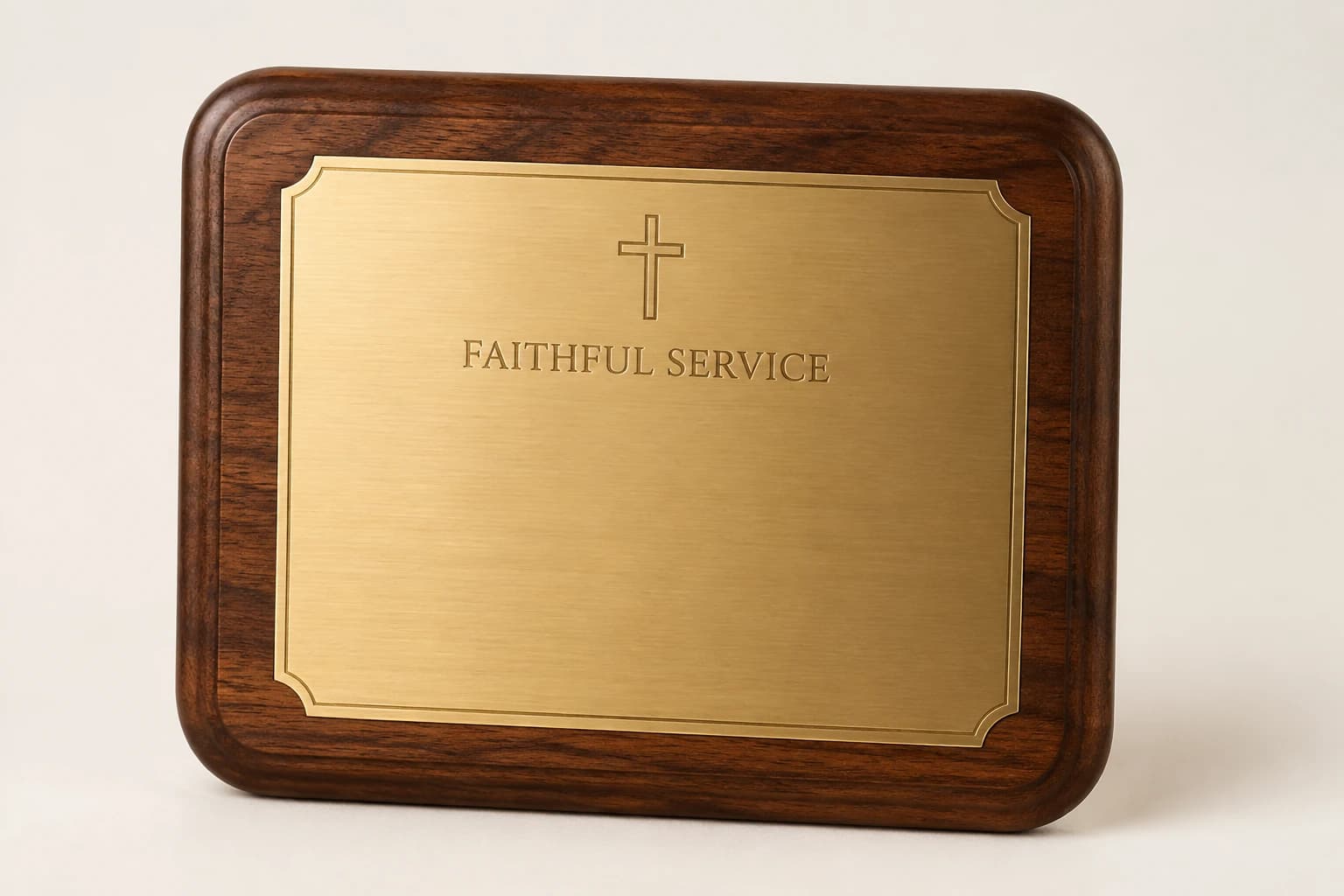
How do you test the citation line as part of the message?
A scripture reference can look deceptively simple because it is short. Review the book name, chapter, verse range and punctuation as one unit. If the congregation uses an abbreviated book name, have the reviewer approve that exact abbreviation for the audience rather than letting the designer shorten it automatically.
A reference beneath a personal sentence may suggest that the sentence is quoted scripture, so use spacing or an approved label to distinguish the two. Compare a citation directly below the passage with a reference placed in its own small area. The right arrangement depends on what is actually being reproduced. For a reference-only gift, a personal dedication should remain visibly the congregation’s own message. When a verse range is changed, recheck the complete citation and any accompanying wording instead of editing only the final number. The small line is part of the meaning of the object, not merely a decorative footer.
Crossway’s ESV page presents Psalm 23 with numbered verses.
Sources: Crossway: Psalm 23 — ESV.org
How does this illustrative text proof work?
A fictional ministry team wants a pastor’s name, a dedication, a long passage and three congregation names on one small plaque. Instead of shrinking every line, the coordinator prepares two concepts. One uses the approved reference with a short personal message; the other proposes a larger format for the complete passage.
The team reviews both at actual size and chooses the version whose hierarchy matches the intended gift. No scripture quotation is supplied in this example, so the worksheet cannot be mistaken for an approved translation. For a reference-only fictional layout, enter With Gratitude, Alex Morgan and Romans 15:13 on three separate lines. No scripture passage is reproduced: the third line is simply a citation for the congregation to review. With Gratitude has 14 characters, Alex Morgan has 11 and Romans 15:13 has 12, including spaces and punctuation. The total is 37 characters; the longest line contains 14. All three are within an illustrative 24-character budget, which still does not establish physical fit or approval of the selected reference.
Full selected passage or Reference with personal dedication: which fits the intended recognition?
A full selected passage gives the approved scripture text a substantial role in the gift and needs enough reviewed space. A reference with a personal dedication can preserve the intended connection with fewer words. Compare the message hierarchy and authorized text scope before reducing type or removing words from the passage.
| Option | Full selected passage | Reference with personal dedication |
|---|---|---|
| Best reason to choose it | Choose this when the scripture itself is central and the proposed format can accommodate the approved text clearly. | Choose this when a small plaque should prioritize the recipient and the congregation’s message. |
| Main review question | Are the translation, passage boundaries, attribution and rendered line breaks all approved? | Does the chosen reference communicate the intended passage without implying that the dedication is a quotation? |
| What to specify | Supply the exact complete text and reference; request an actual-size proof before committing to the layout. | Keep the personal message and scripture reference visually distinct; place any longer passage in a separately reviewed card. |
| Later change | Retain the exact approved passage and translation so a replacement does not import wording from another version. | A later full-passage request changes the text scope and may require a different layout or object size. |
What should the organizer confirm before ordering?
Approve the scripture scope, exact version and personal dedication before compressing the layout. A reference-only treatment can be a deliberate choice, while a full passage requires its own text and attribution review. The order should keep those decisions separate from character counts, physical fit and the cost of the selected format.
How do scripture choices affect cost and production timing?
For Parish Recognition, quote the actual plaque size, approved text, artwork and shipping, and request the applicable design minimum or range. A reference-only layout and a larger full-passage layout are different scopes. Resolve the selected translation, text authority and attribution before approving production; a character count cannot settle those wording decisions.
Can the designer remove words from a verse to make it fit?
Do not silently edit the supplied passage. Ask the authorized reviewer to approve a different text scope, a reference-only treatment or another physical format. The designer can show layout options, but deciding which words carry the intended meaning belongs to the person responsible for the scripture selection and reproduction approval.
Why keep the translation with the working text?
Different translations can use different wording, punctuation and attribution requirements. Record the exact approved version beside the inscription so a later proof is not rebuilt from another convenient online text. Ask the responsible reviewer to confirm reproduction and attribution questions for the selected passage rather than treating a familiar verse as a complete production instruction.
Can a scripture citation be the entire religious reference?
Yes, if the congregation approves that choice for the intended message. A citation-only layout can leave more room for the recipient’s name and dedication. The reference still needs exact spelling and punctuation review. The illustrative sample supplies a citation rather than a quotation, so it does not select or reproduce a translation.
What should be checked in a different script or alphabet?
Have an authorized reader inspect the rendered proof, including character forms, punctuation, line direction and attribution. A typed source can be correct while a selected font or line break produces an unsuitable result. Keep that review separate from the text counter, which measures entered characters without approving the chosen production process or the passage’s meaning.
Sources and scope
The sources below support the cited technical details. The ordering workflows are editorial recommendations. Your project specification, price and schedule are established in the written quote and approved proof.
- Crossway: Psalm 23 — ESV.org · checked 2026-09-05
Which buying guide should you read next?
All buying guidesFor worldwide Parish Recognition orders, name the occasion before writing the inscription: pastor appreciation expresses gratitude, while an ordination anniversary marks a specific event. Confirm the milestone’s meaning with the congregation’s reviewer, then give the personal message and the anniversary line distinct roles in the proposed plaque layout.
For worldwide Parish Recognition orders, choose one joint congregation gift when the intended recipient should own one shared object. Choose separate dedications when different owners or destinations need their own pieces. Agree on ownership and the common message before turning the number of contributing congregations into a physical plaque count.