Parish Recognition · buyer guide
Volunteer recognition alongside pastoral retirement
For worldwide Parish Recognition orders, keep pastoral retirement and volunteer recognition as distinct message groups within the ceremony. Count the actual approved pieces after reviewing people who appear in several ministries. A shared order can coordinate delivery while preserving the retirement dedication, volunteer wording and intended owner of every object.
Reviewed 2026-09-05 · AI-assisted editorial review. General buying guidance; illustrative scenarios are not customer case studies. Images are AI-generated concepts.
A pastoral retirement and volunteer recognition can share an event without becoming the same award. Begin with the retirement gift’s intended recipient and message, then identify the volunteer groups the church has chosen to recognize. Ask whether volunteers receive individual keepsakes, a shared ministry plaque or spoken thanks without a manufactured item. These choices determine the physical order more directly than the ceremony’s attendance count. Keep eligibility and recognition decisions with the congregation’s authorized organizers. Production should receive the resulting list and text rather than decide which ministry roles deserve a piece. If a pastor also serves in a volunteer group, the organizers should deliberately decide whether both forms of recognition apply. Do not remove a recipient from one category merely because their name appears elsewhere, or automatically duplicate a gift because two categories mention the same person.
How do you count recipients and recognition pieces separately?
Build a private roster with a stable recipient identifier and a separate column for each approved physical piece. Then create a production count that contains only the group totals and the personalization needed for the order. A person receiving a retirement plaque and a volunteer keepsake accounts for one person but two objects.
A ministry team receiving one shared plaque may include several people but accounts for one object. Explain these differences in the row labels so a second organizer can reproduce the total. Keep unconfirmed names in a pending group instead of silently adding them to a finished engraving list. For late volunteers, decide whether a later personalized piece, an unpersonalized format or another form of thanks is appropriate. That is a program choice, not an automatic spare percentage added by a calculator.


How do you give the retirement message its own voice?
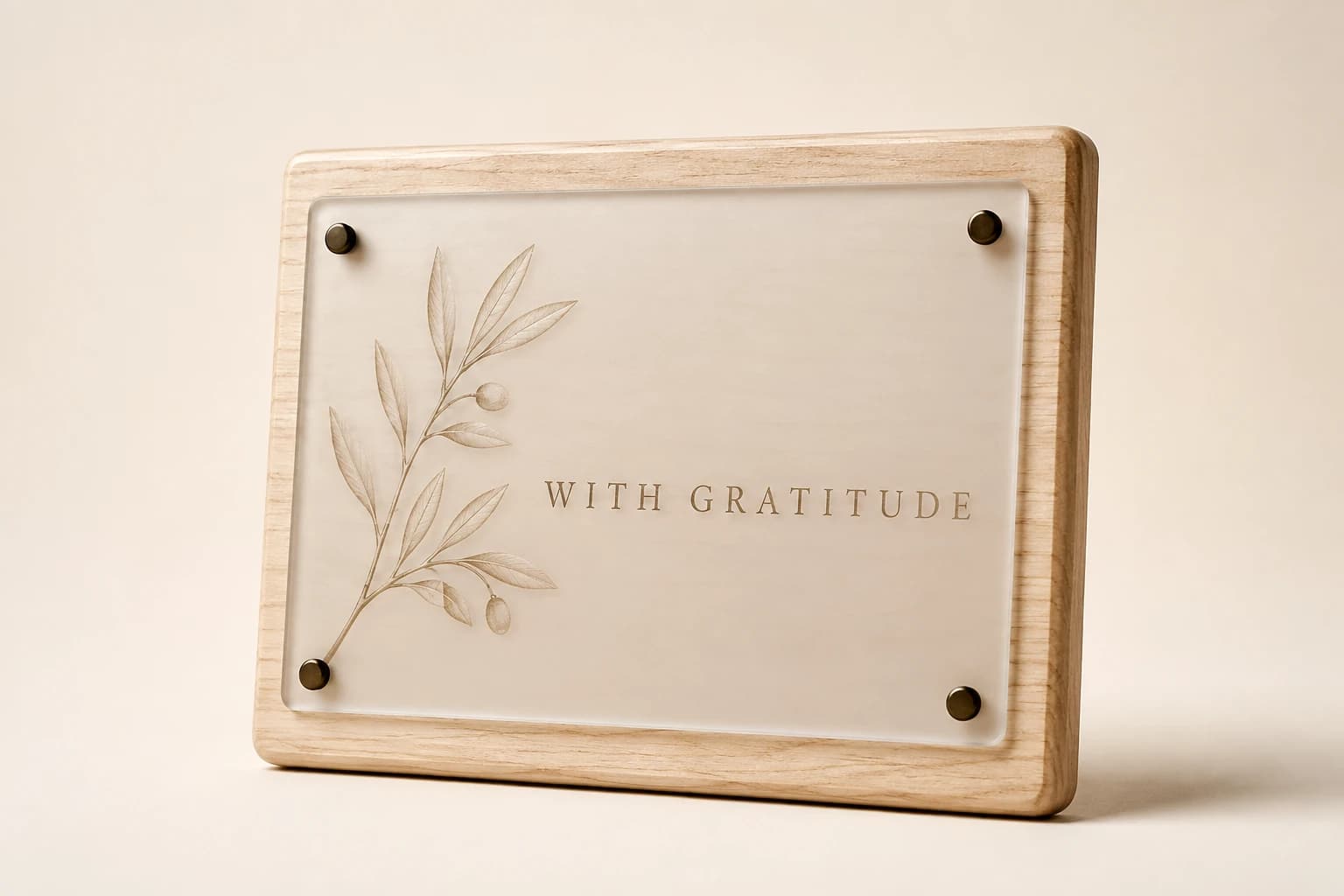
The retirement gift should identify the specific transition the congregation wants to recognize. Volunteer pieces can use a common expression of thanks that does not imply retirement from those roles. Review both texts side by side to catch a copied heading, year range or presenter line that belongs only to one category.
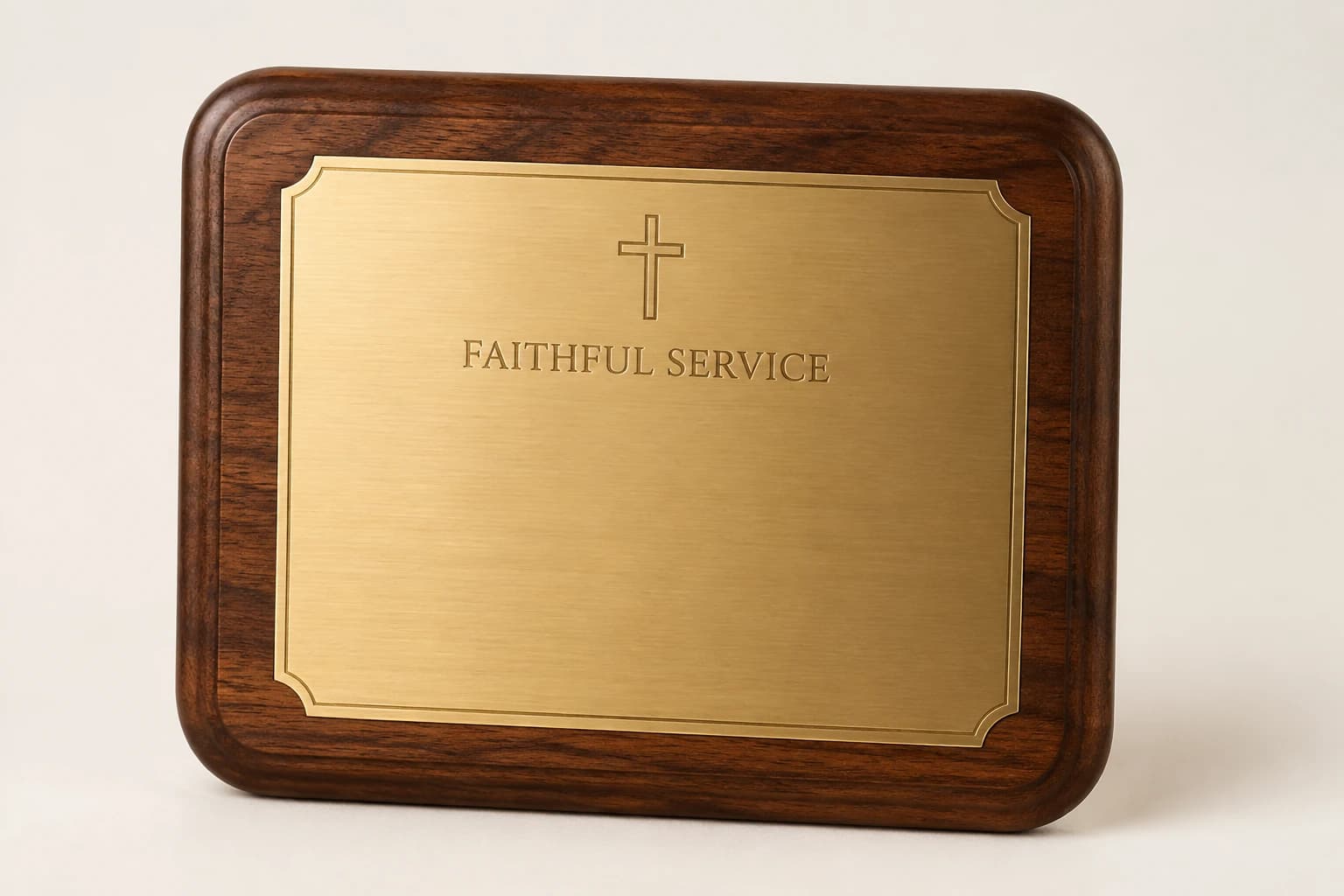
If the same design family is used, let a clear occasion line distinguish the pieces. A larger retirement object is one possible choice, but it is not necessary to make volunteer recognition feel secondary through careless wording or packaging. Ask the organizer to describe how each recipient should understand their piece after taking it home. The inscriptions should remain accurate even when separated from the shared ceremony and viewed without the program or the presenter’s explanation.
DIY Awards presents appreciation and ordination-anniversary wording examples.
Sources: DIY Awards: Pastor Anniversary Tributes and Sample Wordings
How do you prevent ministry overlap from distorting the order?
A volunteer may help with music, hospitality and youth activities. Decide whether the church recognizes the person once or gives a separate piece for each approved ministry contribution. The production worksheet should reflect that rule consistently. Keep the detailed role roster private and use a reconciled list for personalization.
If one person is assigned three identical objects because three ministry leaders submitted the same name, the duplicate may be an error rather than intentional recognition. Ask the coordinator to review repeated recipient identifiers before finalizing the quantity. Conversely, two people with the same display name should not be merged automatically. A stable internal identifier can distinguish them without placing private identifying information on the object. The goal is a deliberate relationship between the church’s recognition policy, the recipient list and the count of physical pieces.

How do you pack by presentation sequence and category?
Separate the retirement gift from volunteer batches in the packing schedule, even when all pieces ship together. Give each batch a ceremony segment, a presenter and a receiver. For named volunteer pieces, decide whether the stage team needs alphabetical order, ministry order or another sequence.
If recipients may be absent, provide a holding location and a later handoff owner so an unclaimed package does not disappear into event storage. Label packages with the minimum information needed to find them. The label should not expose private roster notes or imply that a volunteer has retired merely because their piece shares a box with the pastoral gift. Ask the supplier to confirm any requested grouping and supplied packaging explicitly; a single shipment does not automatically include the exact presentation arrangement the church has in mind.
Total volunteer and retirement pieces
Load the fictional example, then replace its inputs with the reviewed details for your project.
Method: Multiply the entered units by pieces per unit, then add explicitly entered extra category pieces and spares. The result counts inputs without deciding recognition eligibility or product inclusions.
Build your plan
Set spares yourself. This calculates the quantities you enter; it does not assume a recommended buffer.
Use the article’s example files
Sample rows are illustrative and are not production instructions. Replace their assumptions, keep private records separately and complete the approval fields before using the sheet for a real order.
How do you reconcile the ceremony and later handoffs?
Before the event, compare the received pieces against both the physical order total and the presentation list. Record any incorrect name or missing item as an exception with a responsible person. Afterward, reconcile presented pieces, absent-recipient pieces and any approved spares.
Do not mark a person as recognized solely because their item was included in a delivered carton. If a replacement is needed, preserve the volunteer or retirement category and the original approved wording so the correction does not use the wrong template. Keep the church’s private eligibility notes separate from the reorder file. This closes the practical loop: the organizers know which objects were ordered, which arrived correctly and which still need to reach the intended people after the ceremony has ended.
How do you use a duplicate review that protects intentional recognition?
Before the final count, group the private recipient list by stable internal identifier and inspect people assigned more than one piece. Ask a precise question for each: is this an intentional second recognition, or did two ministry lists submit the same person for the same keepsake?
Mark the answer and preserve the category relationship. This review should not automatically merge entries based on display names, because two volunteers may share the same name. It should also not expose private identifiers on the plaque. The production list can carry the approved display text and a neutral item code, while the church retains the private mapping. For a shared ministry plaque, record the ministry as the object’s owner even if a particular volunteer accepts it on stage. Otherwise the post-ceremony list may incorrectly treat that person as the permanent recipient. This small distinction helps the church hand a shared object to its intended display location instead of losing it among individual take-home gifts.
How does this illustrative planning example work?
Imagine a fictional church recognizing twelve volunteers with one keepsake each, alongside two separately approved retirement-related pieces. The coordinator chooses one unpersonalized spare for the volunteer format. The order contains fifteen physical pieces, although the ceremony’s number of people and recognition messages may differ.
A person who appears in both groups remains in both approved object rows; their overlap is reviewed deliberately instead of being treated as either an automatic duplicate or an automatic deletion. For a deliberately small planning exercise, enter 12 units, one piece per unit, two additional category pieces and one spare. The arithmetic is 12 × 1 + 2 + 1 = 15 physical pieces. The categories in the scenario must be approved before those numbers become an order. The spare is an explicit fictional choice, not a recommended percentage or a product inclusion.
One coordinated order or Separate retirement and volunteer orders: which fits the intended recognition?
A coordinated order can group receiving and production while retaining separate retirement and volunteer proofs. Separate orders can give each program its own approval and delivery path. Compare the actual deadlines and ownership responsibilities, and review overlapping recipients deliberately before using either approach to calculate the physical pieces.
| Option | One coordinated order | Separate retirement and volunteer orders |
|---|---|---|
| Best reason to choose it | Use one purchasing process when retirement and volunteer pieces can share a deadline while retaining separate texts and packing groups. | Use separate orders when the approval owners, dates or product decisions are materially different. |
| Main review question | Are category counts, repeated recipients and presentation responsibilities clearly reconciled? | Will the second order still arrive and be checked before its own handoff, and who coordinates the two records? |
| What to specify | Provide separate line items and proof references for retirement gifts, individual volunteers and shared ministry pieces. | Keep each order’s scope explicit and maintain one ceremony-level distribution list to prevent gaps or duplicate assumptions. |
| Later change | A late volunteer addition needs a recipient and component row without changing the already approved pastoral retirement dedication. | Separate releases can proceed only against their own approved names and receiving plan; shared ceremony attendance is not shared text approval. |
What should the organizer confirm before ordering?
Resolve overlapping ministry lists and the purpose of every retirement or volunteer piece before releasing quantities. Keep the two message groups distinct even when they share a ceremony and delivery. The receiving and later-handoff records should identify what each person is meant to receive, including intentionally separate recognitions.
What should a combined retirement and volunteer quote include?
Ask Parish Recognition to price the retirement pieces and volunteer format separately within the proposed order, identifying quantities, personalization, artwork and shipping. Request the applicable minimum or range for each selected construction. Shared delivery may be useful, but a late retirement dedication should not be hidden inside an otherwise approved volunteer-name list.
Does serving in several ministries mean several keepsakes?
Follow the congregation’s deliberate recognition policy for this ceremony. One person can appear on several ministry lists without automatically requiring several pieces, while separate approved recognitions may justify more than one. Keep a stable recipient reference and the reason for each physical object so deduplication does not erase an intentional gift.
Should volunteers receive the pastor’s retirement message?
Give volunteers wording that reflects their own recognition. A retirement dedication can refer to an ending role or a personal ministry relationship that does not apply to the volunteer group. A shared visual theme can connect the ceremony pieces while their words remain specific to the people and occasions the congregation has actually approved.
How should the fifteen-piece example be read?
The fictional ceremony includes twelve volunteer keepsakes, two separately approved retirement-related pieces and one deliberately chosen unpersonalized spare. That is fifteen physical objects, not a claim about fifteen unique recipients. Keep the category and ownership rows visible so a person recognized in both groups is reviewed without changing the arithmetic silently.
What happens to a piece for an absent volunteer?
Assign a later handoff owner and keep the item out of the completed distribution count until that handoff occurs. Do not substitute another name or repurpose a personalized piece at the ceremony. The coordinator should retain its recipient reference and protective packing so the intended recognition can reach the right person afterward.
Sources and scope
The sources below support the cited technical details. The ordering workflows are editorial recommendations. Your project specification, price and schedule are established in the written quote and approved proof.
- DIY Awards: Pastor Anniversary Tributes and Sample Wordings · checked 2026-09-05
Which buying guide should you read next?
All buying guidesFor worldwide Parish Recognition orders, name the occasion before writing the inscription: pastor appreciation expresses gratitude, while an ordination anniversary marks a specific event. Confirm the milestone’s meaning with the congregation’s reviewer, then give the personal message and the anniversary line distinct roles in the proposed plaque layout.
For worldwide Parish Recognition orders, schedule each congregation’s piece around its actual receiver and presentation role. A host church receiving the main gift does not confirm that visiting congregations’ dedications are ready. Track proof approval, receiving checks and presenter assignment separately, then use the rehearsal as a shared readiness checkpoint.